Monday, December 12th, 2022
The Gardens in Winter
Keep your garden wildlife friendly
By Leslie Gartrell
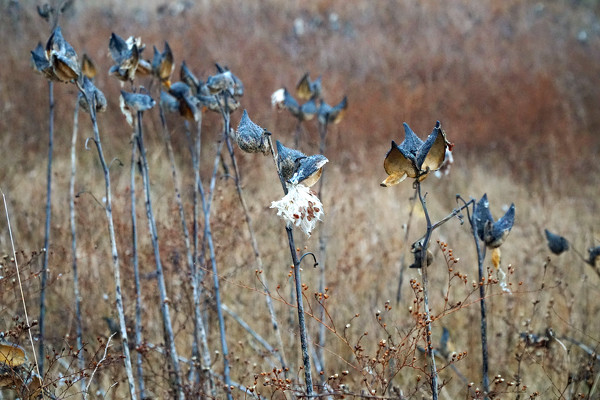
Photo by Leslie Gartrell/The Daily Standard
Milkweed stalks stand in a small field on Friday. The plant can be left standing during the winter in order for the plant to reseed for the next season and provide shelter for beneficial insects.
With winter in full swing, many gardeners have packed up their tools for the season and are waiting for seed catalogs to arrive.
However, gardens and outdoor landscapes can be bustling with life, even in the depths of winter.
Ryan McMichael, Ohio State University Extension educator for Mercer County, offered some tips on how to keep gardens, landscapes and other outdoor spaces hospitable to wildlife during the winter months.
Although residents may have already raked their leaves, McMichael said there is virtue in leaving perennials, leaves and other foliage in place.
"At the end of the fall season a lot of people like to clean those up and they'll remove any dead foliage. There are benefits to doing that - less chance of disease, you clear out some of those things that might be problems in the future, and a lot of people don't like the unsightly look of dead foliage," he said.
"On the flip side of that, those can offer the beneficial habitats for some of our beneficial insects," he continued. "So… leave some of those up, depending on (what kind of plants) are already in your landscapes. You don't have to cut everything completely to the ground."
For example, McMichael said those with ornamental grass may not like the appearance of the grass during the winter. At the same time, it can be an inviting place for some small wildlife, he said.
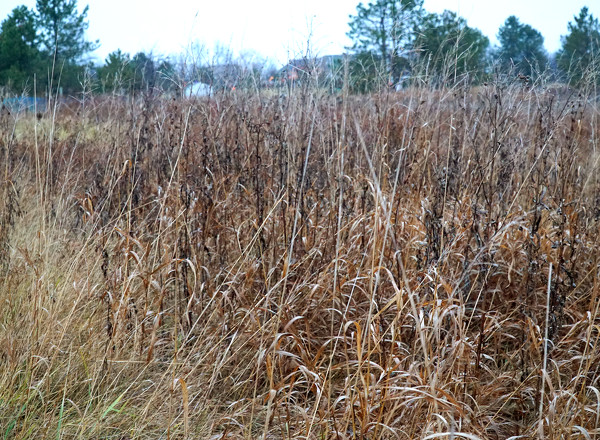
Photo by Leslie Gartrell/The Daily Standard
Keeping ornamental grasses, perennials, leaves and other foliage in place during the winter can provide shelter for beneficial insects and small wildlife.
Many small critters such as bumblebees, hummingbird moths, fritillary caterpillars and toads seek shelter in leafy blankets, according to the U.S. Humane Society.
Leaving shrubs, perennials and leaves around trees provide winter refuge for wildlife, a snack bar for foraging birds and potential nesting sites for rabbits in spring.
Additionally, leaving plants such as milkweed up in the winter will allow the plant to reseed itself for the next year, McMichael said.
"To leave those open is to really going to help do some reseeding of that area, so next year you have that milkweed continue to come up," he said. "That seed pod has… to dry out and then that seed is released. Then it will continue to reseed itself and come up for the next year, which milkweed is great for our different pollinators (and) monarch butterflies in particular."
Beneficial insects will also crawl inside dry plans stems or pods for shelter, he added.
Miscellaneous brush, thistle down, bark, grass and milkweed fibers will often be used by mice, usually deer mice or white-footed mice, in the winter to beef up empty bird nests, according to OSU Extension. Mice will weave a roof over the nest, creating a warm and protective shelter.
However, McMichael said those with vegetable gardens might want to keep their gardens clear to prevent disease for the following growing season.
While many vegetable gardeners are thinking about their upcoming season, winter is often a difficult time to find food for non-migratory wildlife, McMichael said.
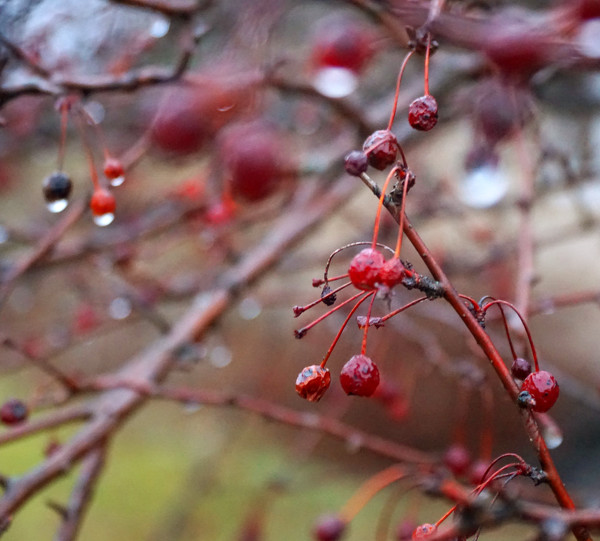
Photo by Leslie Gartrell/The Daily Standard
Berry producing trees and shrubs, such as this crabapple tree, provide food for overwintering birds during the winter months.
Having shrubs, flowers, trees and other plants which have lingering fruits or seeds are helpful for birds, rabbits, squirrels and other animals.
"Seeds heads that are left on (plants) can be food resources for different animals," he said. "In terms of what to leave up in order for wildlife to eat, a lot of our fruit trees or ornamental fruit trees… will hold onto its fruit. The fruit will stay on and birds can continue to utilize some of that as food sources."
Some fruit trees, such as sumac, blueberries, black cherry, black gum, currants, wild holly, dogwood, hackberries, pokeweed, Virginia creeper and juniper berries provide fall and winter food for bids, according to OSU Extension.
For those without berry producing trees or shrubs, OSU Extension said people can "recycle" their live Christmas trees or wreaths to provide a holiday feast for birds. Christmas trees and wreaths can be placed the yard with garlands of cranberries and raisins to provide a seasonal buffet.
In addition to planting fall and winter berry producing trees and shrubs, OSU Extension said landowners can also provide a heated water bath and suet with berries in it to help overwintering bluebirds.
McMichael suggested speaking with a local seed purveyor to find the best kind of seed to feed overwintering birds.