Special Weather Statement issued October 11 at 11:47PM EDT by NWS Wilmington OH (details ...)
As low clouds begin to clear overnight, conditions for fog development will become more favorable. Some dense fog is possible and may result in visibility of one quarter mile or less. Locations farther east into Ohio and farther south into northern Kentucky could see visibility worsen through daybreak.
Motorists should be prepared for rapid changes in visibility. Allow for greater distances between vehicles, use low beam headlights, and allow extra time to reach your destination.
Special Weather Statement issued October 11 at 7:36PM EDT by NWS Wilmington OH (details ...)
As low clouds begin to clear late this evening and through the overnight, conditions for fog development will become more favorable, especially across eastern Indiana and western Ohio. Some dense fog is possible and may result in visibility of one quarter mile or less. Locations farther east into Ohio and farther south into northern Kentucky could see visibility worsen through daybreak.
Motorists should be prepared for rapid changes in visibility. Allow for greater distances between vehicles, use low beam headlights, and allow extra time to reach your destination.
55° 55° patchy Mon 84° Mon 84° patchy 66° 66° Tue 87° Tue 87°
Wednesday, January 21st, 2009
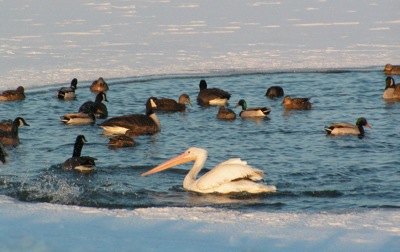
Dropping in for a visit
Photo by Shelley Grieshop/The Daily Standard

An American white pelican chases mallard ducks and Canada geese around an unfrozen section of Grand Lake along West Bank Road on Tuesday. A pair of them are currently using the lake as a stopover on their migratory trip, which likely will take them to Texas and the Gulf region, according to Todd Haines, manager of District 5 of the Ohio Division of Wildlife. Haines said the pelicans may have taken off from the Minnesota region a bit late this winter after the open water froze. The pelicans must eat often and likely are filling their stomachs at the lake before again taking flight, Haines said. The birds, which are the only white pelicans living in North America, can weigh up to 16 pounds and have a wingspan of 9 feet. The pouch below their long, yellow-orange bill can hold up to 3 gallons of water. They mainly eat fish by floating along the water and scooping them up with their enormous bill.

Additional pictures on this date